
The idea of teaching a child to read can be intimidating. What curriculum do you use? When should you start? How can you gauge reading readiness? Then you’re at the park and some mom says their two-year-old knows all their letters and you panic. Your four-year-old only knows the first letter of their name. Are you behind? Is it too late? Most likely what she means is that her child can sing the ABC song, which is great, but not the same as visually identifying a letter and calling it by name.
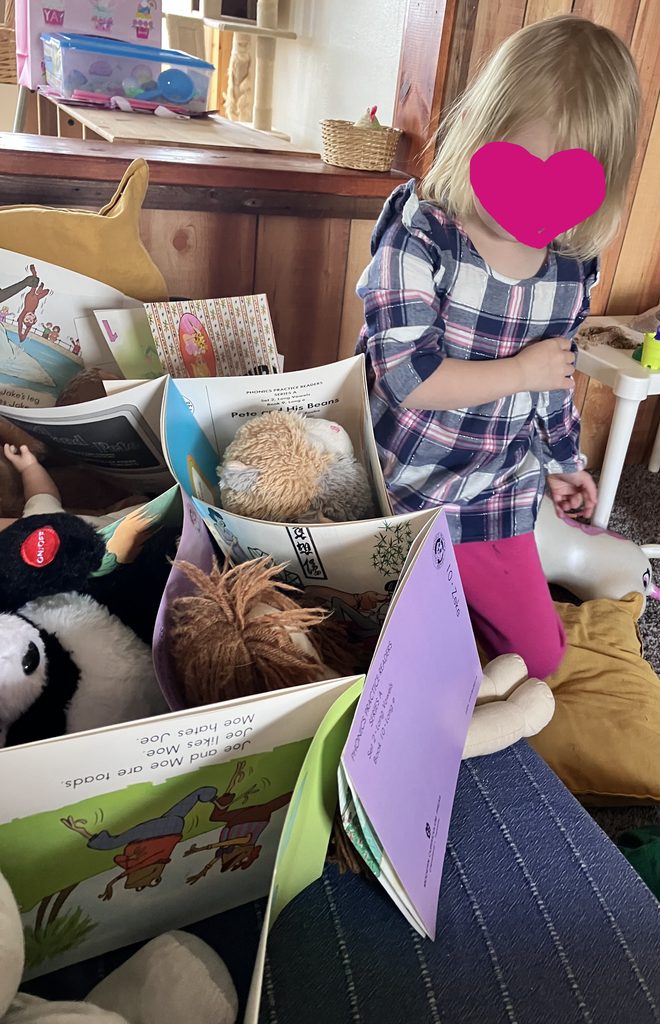
As a former preschool teacher, special education teacher and intervention teacher, turned homeschool mama, let’s break reading readiness down into two parts. The first is memorizing letters and the second is learning phonics or actually learning to read. Let’s look at the signs that a child is ready for each part and when the ideal age to start is for most children. Special needs children will be on their own timeline, and I will talk about them at a later date.
Learning Letters
Let’s talk about memorizing letters first. Many two- and three-year-olds are wonderful at memorization. They will memorize songs and whole books to “read.” If a parent wants to, they can take advantage of this to teach their child what the name of each letter is and maybe some of the sounds or corresponding words. I’ve heard a toddler bopping around the playgroup saying “A! Ah, ah, ah Apple!”
The question is, is this good or useful? Will this child be ahead in learning to read because their parents spent time with flashcards or alphabet books teaching the child to memorize their letters? This child will still learn to read at the same age as other children.
There is nothing harmful or bad about teaching younger children their letters, except in missed opportunities for other development during this age of exploration. Also, a 4- or 5-year-old who is truly ready will learn their letters fairly easily, while a younger child will need significantly more time, repetition and effort to learn their letters. Early letter learning does not mean they will learn to read any earlier than other children, so it really is best to wait.
A Little Test to See Where Your Child is At
If you have a 3- to 5-year-old, try this little test. Take the word “bat” and ask your child to listen as you say each sound separately /b/ /æ/ /t/. Then ask them what the first sound was. You can even repeat it three times for them. Most 3-year-olds will not be able to answer and even younger 4-year-olds will not be able to answer. They are not ready for reading instruction. You can try this with multiple three letter words that start with consonants.
If a child is able to do this, then this is a good time to start slowly teaching them to identify letters. Initially start with teaching how to identify the names of uppercase letters. Many will argue that children should learn the sound each letter makes before the name of the letter, but in my experience that can create confusion. I prefer children learn the names of uppercase letters, the names of lowercase letters, then the consonant sounds of letters before starting reading instruction. Vowel sounds should wait till a child is ready for phonics, or actually learning to read.
Let’s See If They Are Ready to Learn to Read
The second test you can do is to see if your child can hear rhyming. Say three words that rhyme, like “cat, bat, mat” then ask your child which word sounds the same at the end like the other words, “man, rat, or red.” You can even repeat all the words multiple times for your child, but most children will not be able to answer reliably until the age of 5, and for some children not till age 6.
These two tests will give parents a good idea if their child is ready to start learning phonics, or the process of reading. If a child can hear the beginning and ending sounds of words and repeat the sounds, or identify the sounds in another word, this indicates that their brain is developed enough to start formal reading lessons. For the majority of children this will click from age 5 to 6 1/2.
Limitations to Early and Late Reading
Now there is something called hyperlexia, which is an early desire in children to learn their letters and start reading, often basically on their own. This is highly associated with autism, but it can also be a child who is gifted (has an IQ in the top 5% of the population). This is the rare exception and as it is highly associated with autism, not necessarily a good thing. These children also can struggle with comprehension of what they are reading for many years.
By about the age of 7 gray matter in the brain peaks before it starts pruning unused synapsis. Brain Development Milestones in Children Ages 5-7. This makes learning to read at an older age more challenging for children, so there really is a sweet spot for reading readiness. This doesn’t mean a 7-year-old can’t learn to read, just that it will be more challenging.
What to do in those early years
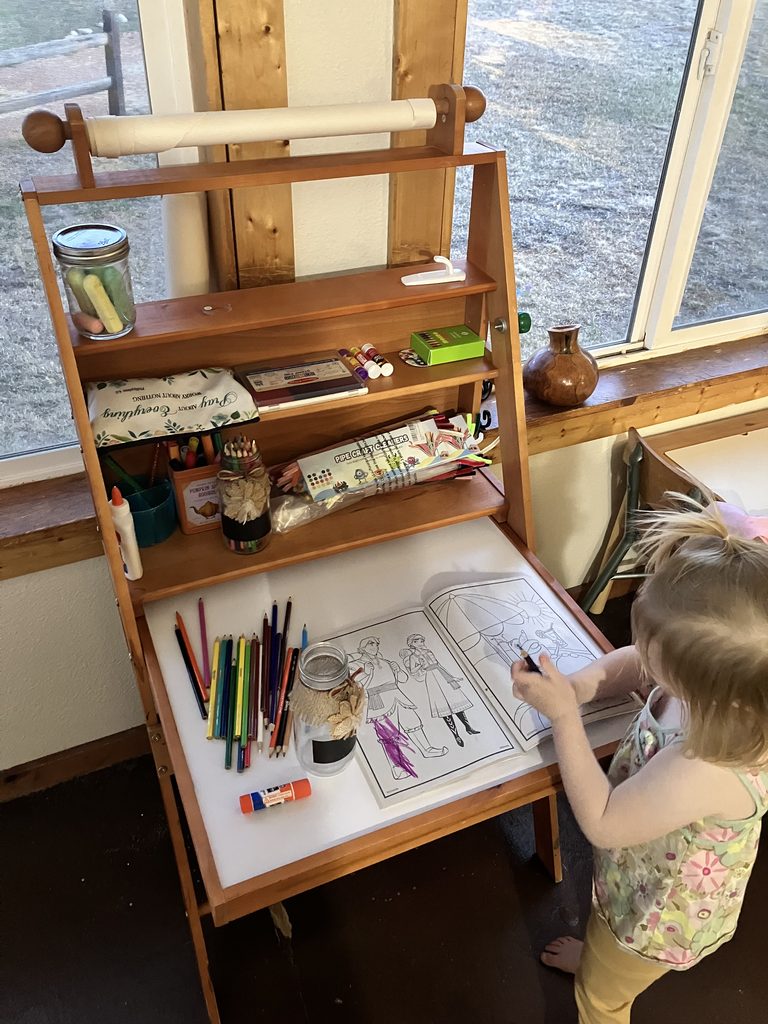
I would encourage parents to focus on language, vocabulary, comprehension and encouraging a love of reading through wonderful, engaging picture books at ages 2 through 4, even 5 for many children. Sing songs together, play fingerplays, recite verses or nursery rhymes, all of these things prime the brain for later learning. Art builds fine motor skills and visual spatial skills for reading and writing. Playing outside builds gross motor and fine motor skills.
To sum up reading readiness
Depending on your child, it is ideal to start teaching them their letters roughly 6 to 12 months before starting to teach them to read. This means from 4 ½ to 5 ½ is a great time to teach children their letters. Then when your child can reliably recognize at least 20 uppercase letters and 15 lowercase letters, and they can identify rhyming sounds, they can start a phonics program to start learning how to take apart and put together the sounds of words. This should be anywhere from age 5 to 6 1/2.
I will talk about the curriculum options for letters and phonics in another post.
Happy Learning!
Preschool Essentials: Stories and Activities Overview – hummingbirdhomelife.com
Our September Preschool Plan – Apples & Fall Delight – hummingbirdhomelife.com
Join Us for a Free Preschool Math Curriculum – hummingbirdhomelife.com
Free September Preschool Math Curriculum – hummingbirdhomelife.com
Leave a Reply