
How do you judge that a child is ready to learn handwriting? It is the first step in learning how to write, but it is also intertwined with learning how to read. Many families buy learning books from a store that have letters and writing in them for young children of all ages, but are these actually good and useful? I would argue that they are not. What is the best way to approach handwriting and what age is the best age?
The first test for handwriting readiness
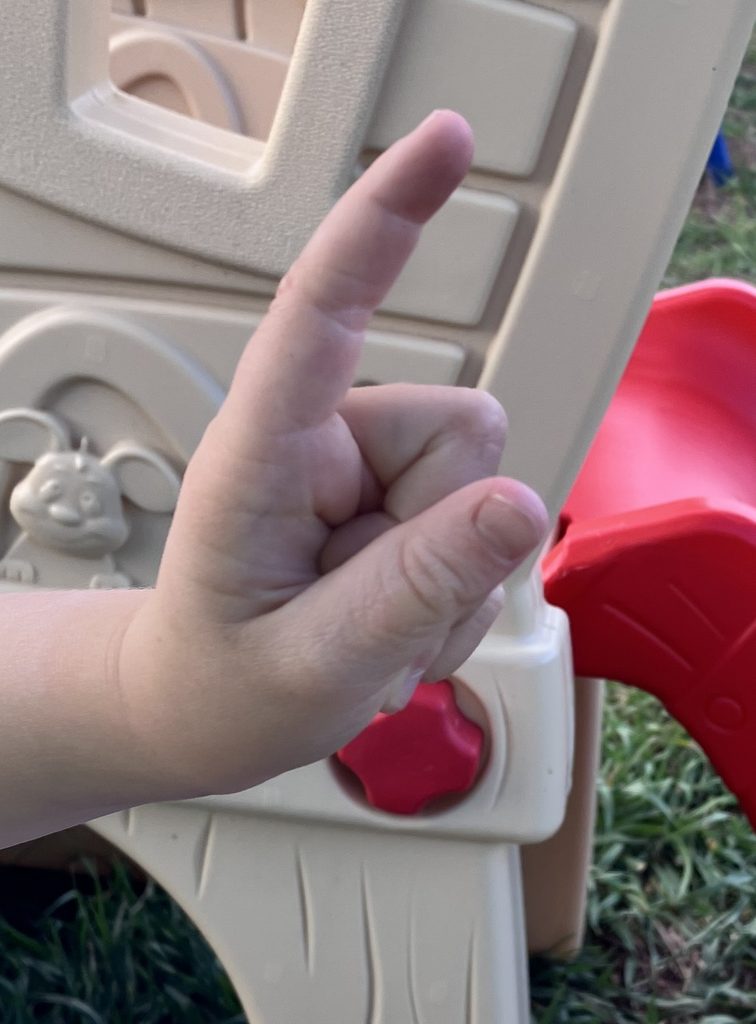
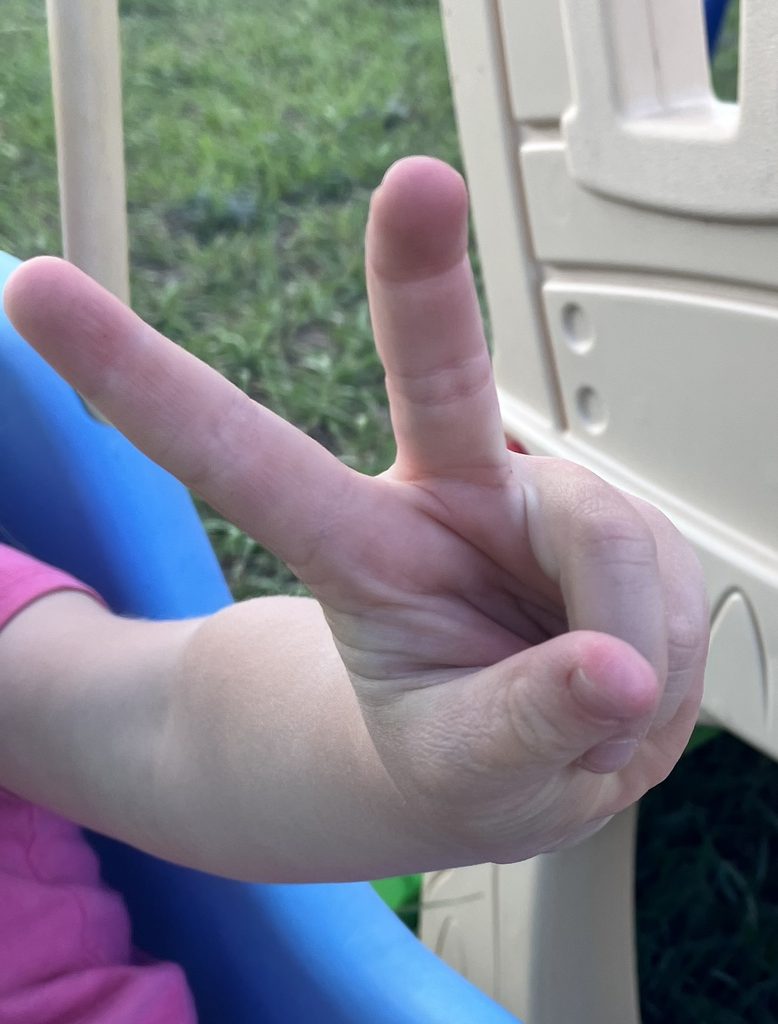
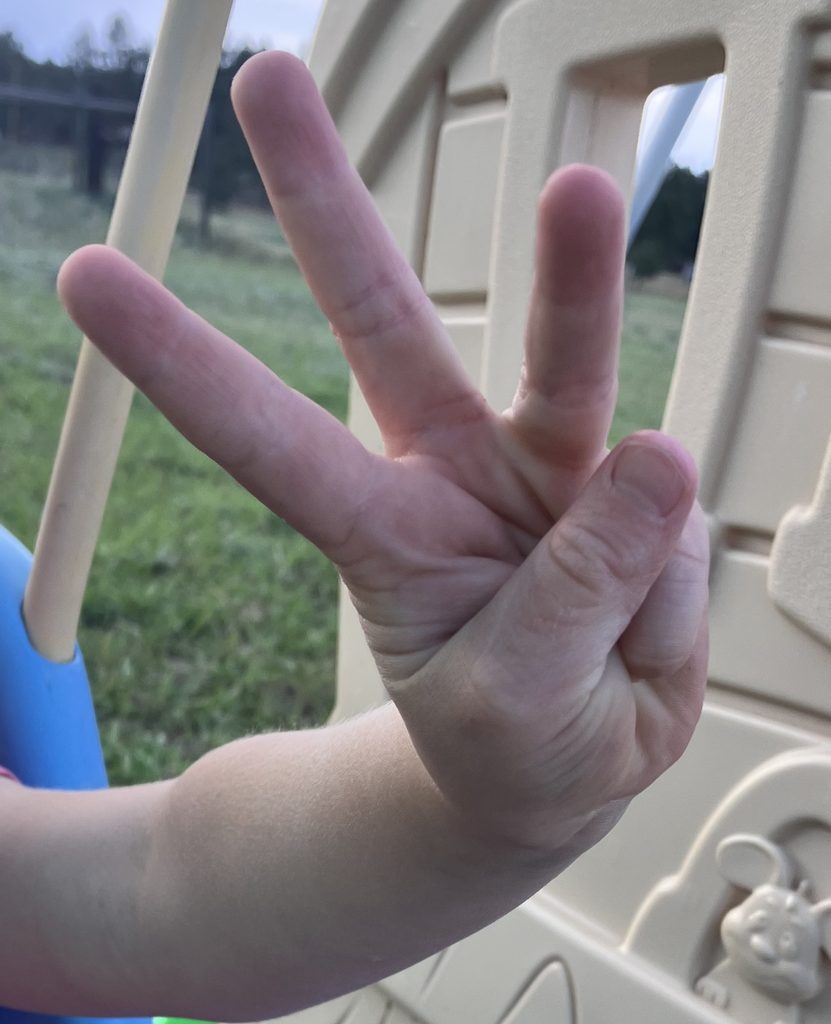
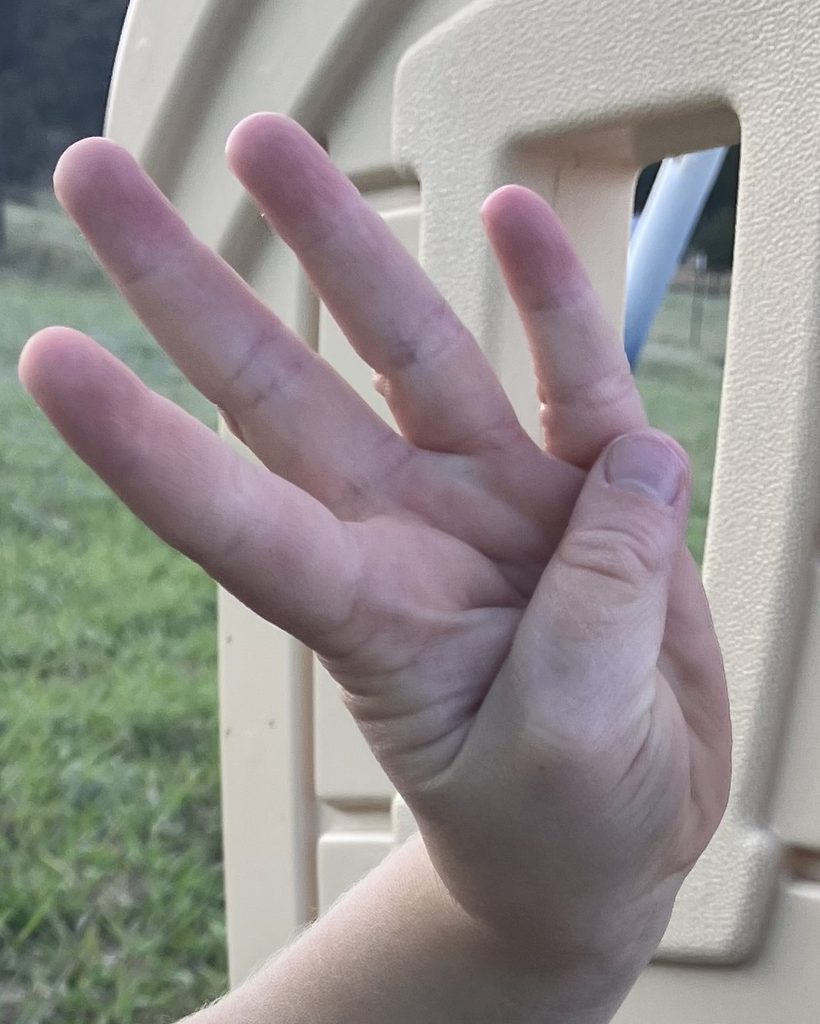
There are three little “tests” to check for handwriting readiness. The first one is do they have the manual dexterity to hold up 1, 2, 3, 4 & 5 fingers for roughly 15 seconds without you having to move their fingers around. You can show them with your fingers, but they should be able to independently move the fingers from one number to the next and take in the visual information to copy with their dominant hand. Most children will be able to do this somewhere between 3 ½ and 4 years of age.
The second test for handwriting readiness
The next test for handwriting readiness is to see if your child can maintain the correct grip on a triangular pencil or crayon for 30 seconds. Place the crayon in front of your child pointing at them. Have them grip it with their thumb and pointer finger, then flip it so it is resting against their hand, and their middle finger is against the back. See if after flipping the crayon they can maintain a three-finger correct grip for about 30 seconds without correction while drawing.
This is something you can practice with your child, but it is important for children to be able to hold crayons and pencils correctly when starting handwriting practice. If you are having to correct their grip every 10 seconds, then they aren’t ready, and if they use an incorrect grip their hand will start to ache over time. Most children will be able to maintain the correct grip starting around 3 years 9 months to 4 years 9 months. There is a wide range of normal for this skill and although practice can speed up this skill, it comes down to fine motor skills and muscle memory. Triangular crayons, pencils or pencil grips are great for beginners.
The final call for handwriting readiness
The final test for handwriting readiness is to test their visual reproduction skills. Try drawing a large smiley face covering an entire page and ask them to copy it onto their page. What you are looking for is similar dimensions, not perfection. Does the large circle take up most of the page like yours? Are there two eyes in similar positions as on your page and a smile? Or are the eyes and mouth all bunched up in the middle of the page?
In this case, we want to see that a child can visually take in information and then reproduce it with similar spacing. If your child draws smiley faces all the time, or you heavily prompt them, then this is not actually showing their skill. Try drawing a square face instead with a frown. See if your child can reproduce the spacing and the direction of the smile. If a child does not have the visual skills for this yet, then an A with the small line at the bottom or with the A open at the top will all sort of look the same to them. This visual reproduction skill usually kicks in from 4 to 5 ½ years of age.
Putting it all together
Manual dexterity, correct grip and visual reproduction are the three skills needed before a child is ready to start handwriting. Some children are ready at 4 and others not till 5 ½. Both are normal and can be as much about your child’s personality as how much interest they have in drawing and writing. The average is probably around age 5.
If you practice these tasks multiple times a day then your child may master them sooner, but then they are not very good indicators of true readiness. Once a week to once a month is plenty of practice without skewing the results.
Before handwriting
Before handwriting, children can still practice pre-writing skills. Drawing with triangular crayons, especially on blank pieces of paper is great practice. Blank pieces of paper help children develop their visual skills. Triangular crayons help them develop a good grip.
Playing fingerplays or singing songs with hand and finger motions develops manual dexterity and visual reproduction skills. Simple songs like The Itsy-Bitsy Spider and creating a hand spider are wonderful fine motor skills.
Building with wooden blocks or large Legos is a wonderful way for children to build visual-spatial skills and fine motor skills.
Once a child is ready
There are a number of handwriting curriculums out there. Here are the two that I recommend. These are standalone handwriting programs, but there are many curriculums that incorporate handwriting within the curriculum. I will evaluate all-in-one curriculums at another time. Often, they have strengths and weaknesses in different subjects, so I prefer standalone curriculums.
The first curriculum is my favorite and what I will be using with my daughter. This is The Charlotte Mason Handwriting Series: Capitals (Book 1) with Handwriting Supplies Kit – Simply Charlotte Mason. This is a very affordable handwriting curriculum. The multisensory sand writing and slate writing deepens children’s feel for how to correctly form capital letters. This is the best handwriting curriculum for homeschool families out there. It starts slow and builds up sequentially and not in alphabetical order. Their classic style, rather than slanted style, is best for children. And their whole series, through cursive, is very well done.
The next curriculum to look at is Learning Without Tears for Pre-K and the accompanying Learning Without Tears Hands-On Student Pack. This is also affordable and teaches letters from easiest to most difficult as well. This includes wooden pieces for students to use to form the letters and a chalk board. It does not include a sand tray, and the pace is a bit faster than Charlotte Mason, which would work better for slightly older children learning handwriting for the first time.
Drawing to a close
If you would like me to look at any other handwriting curriculums to give my opinion, I would be happy to.
To support children in their writing and pre-writing skills, these are some other products that are beneficial for children.
Puzgic Stem Kids Toys for Creative Learning
As an Amazon Associate, I earn from qualifying purchases.
Happy Writing!
Preschool Essentials: Stories and Activities Overview – hummingbirdhomelife.com
Join Us for a Free Preschool Math Curriculum – hummingbirdhomelife.com
How I am gently teaching my preschooler German – hummingbirdhomelife.com
Leave a Reply