
Wondering what you should do with your backyard, porch, or balcony so your young child can play outside and be engaged in their play? Here are some suggestions to make small or large spaces enticing for your child.
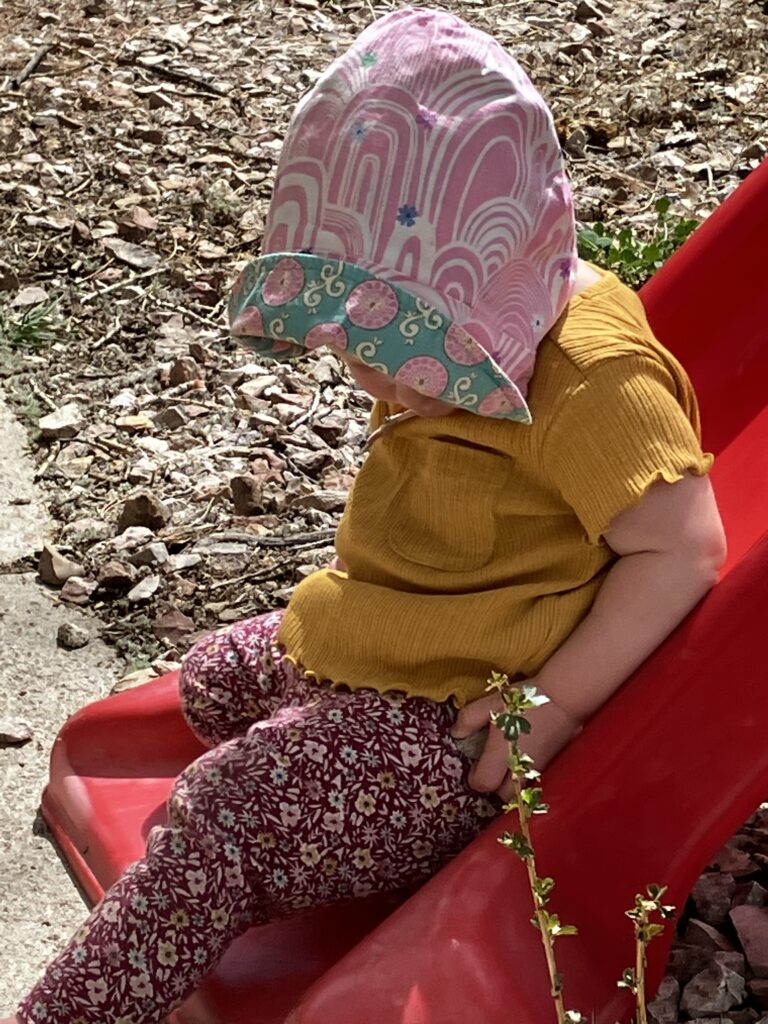
Whether you have a standard backyard, 40 acres, a patio, a balcony, a front yard, a side yard, or a rooftop terrace, if it is at least 4 by 6 feet, you can make an outdoor space for your child to play. Outdoor spaces for young children to play give them, and you, a break from being inside all day and is vital for health and development. In Scandinavian countries, it is typical for young children and infants to nap outside in strollers, even in very cold temperatures. It gives children a respite from the germs, air pollution, and noises of indoor life. Fresh air and sunshine are healthy for our bodies and important for our immune systems to function properly. Playing outside allows children time to decompress and move their bodies. The feel of wind and sunshine on their skin, the smell of grass and trees, and the sound of leaves and lawn mowers engage their senses. Children can explore their outdoor environment and develop their gross motor skills through climbing and running, their fine motor skills through playing with dirt and rocks, their hand-eye coordination by throwing a ball, and their proprioceptive skills through jumping and swinging. Let’s look at what elements to have in your outdoor space to entice your children to enjoy being outside and to stimulate their minds.
The first element to have is water. Water play outside, if it is at least 60°F, provides a lovely sensory experience for young children. Whether this is a large bowl, basin, water table, kiddy pool, a horse trough, natural pond or large pool, young children love to play with water. They love to splash in it, pour water into and out of different containers, wiggle their toes in it, create bubbles and explore the feel of water on their skin. Water is a sensory experience and is great for outdoor play. Children should have funnels, cups and sponges to use in the water to experience all of its diverse qualities. Water play teaches cause and effect, fine motor skills, and hand-eye coordination.
The second element is living plants. These can be two pots with plants growing in them. This could also be a full garden, a forest behind your house, succulents if you live in the desert, or a backyard with grass. There should be dirt, rocks, leaves, something to smell, and something to touch with gentle hands. This is about creating a space to activate your child’s senses through visual green growing plants and their smells, sounds, feels and, possibly, tastes. If you do have a standard yard with grass, see if you can also have trees, bushes, or other plants growing. If you have pots, see about growing herbs that children can smell, or taste, like sage or mint. Green growing things invite young children outside and stimulate their senses in a way that concrete and rocks cannot.
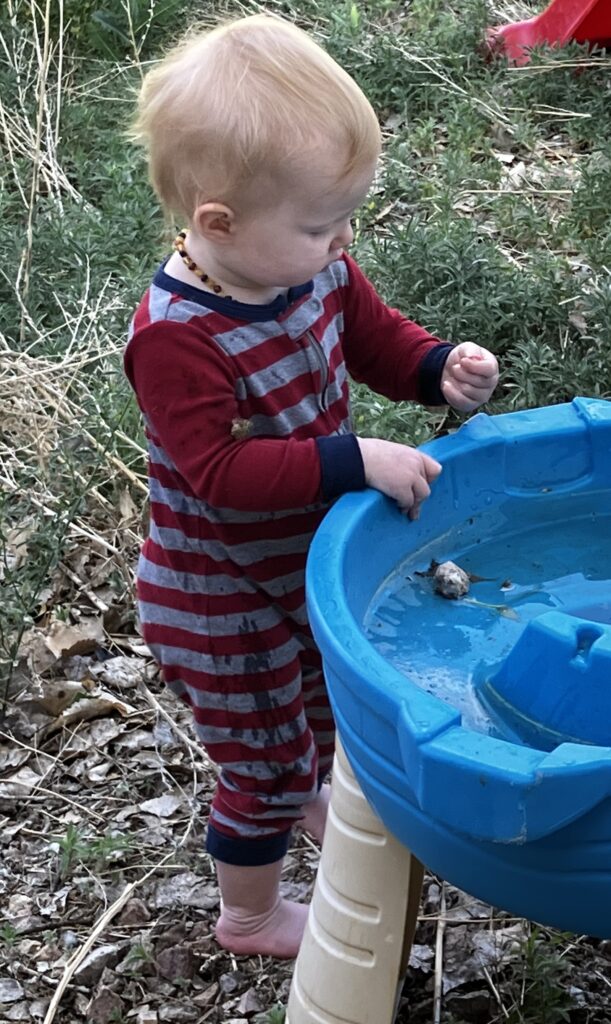
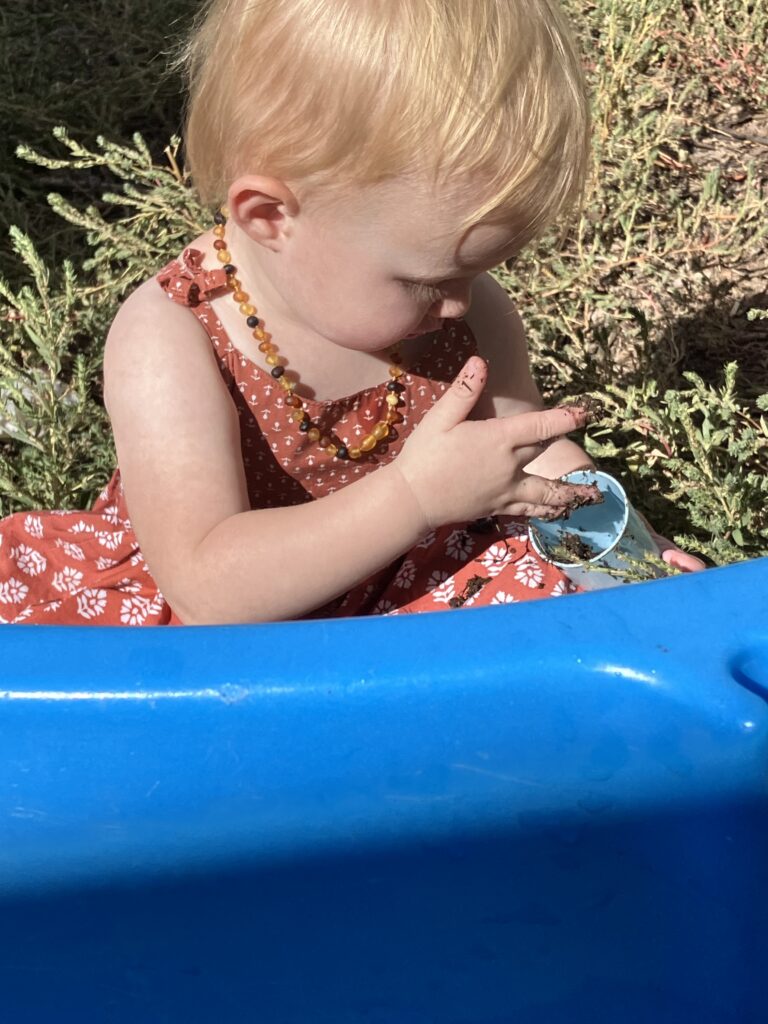
El tercer elemento que hay que tener es arena, tierra y/o guijarros que su hijo pueda recoger, verter, construir, ensuciar y manipular con las manos. Deberían poder mezclar este elemento con su agua para crear nuevas sensaciones y aprender sobre el barro, la arena mojada o cómo el agua fluye sobre las rocas. Puede usar cualquier cosa, desde un cubo de plástico hasta un arenero enorme, o tal vez su patio trasero sea la playa. Se debe animar a los niños y permitirles hacer pasteles de barro y castillos. Deben tener palas, cubos y moldes para llenar y crear. Esto les enseña causa y efecto, coordinación mano-ojo, habilidades motoras finas, habilidades visoespaciales e incluso habilidades emocionales a medida que navegan por sus creaciones que se caen o no salen como las habían planeado.
Si tiene un espacio exterior muy pequeño, esto es todo lo que necesita para su hijo. Quizás añada una pequeña silla y mesa para usted para completar el espacio. Su hijo todavía puede pasar 45-60 minutos al aire libre todos los días en este espacio. Pueden ayudarle a regar las plantas, pueden merendar fuera y pueden jugar. Puede encontrar parques cerca de usted, u otros espacios al aire libre, para desarrollar habilidades motoras gruesas porque aquí es donde paso a hablar de equipos de juego al aire libre para espacios exteriores más grandes.
La primera herramienta motora gruesa para su espacio exterior sería un columpio. Puede ser un columpio individual o un juego de columpios completo. Funcionan hamacas, columpios para bebés o columpios normales. Los columpios desarrollan la percepción propioceptiva de los niños a través del viento contra sus cuerpos y la sensación de ir y venir repetidamente. A medida que los niños crecen, puede cambiar un columpio para bebés por un columpio más tradicional y su hijo puede aprender a impulsarse boca abajo en el columpio, o sentarse de lado y fingir que está en un caballo hasta que esté listo para aprender a bombear las piernas. Los niños pueden trepar por un columpio, colgarse de él o crear una tienda de campaña colocando una toalla sobre él. Los niños pueden empujar a sus muñecas, animales de peluche o dinosaurios en el columpio, y aprender a no ser golpeados por el columpio que regresa. Los columpios son geniales para el cucú-tras, hacer cosquillas en los dedos de los pies, cantar canciones y ser tontos con los bebés. Son geniales para que los niños pequeños aprendan a subirse, pedir que los empujen o columpiarse boca abajo.
The second most important play equipment is a slide. A plastic toddler slide works great, but larger slides attached to swing sets or tree houses are also great. A slide placed on a hill and properly secured can also be great fun. Part of the slide is the stairs. Learning how to go up the stairs is just as important a skill as learning how to get into position at the top of the slide and control the landing. Slides are all about cause and effect. Children can put balls, dolls, cars and other toys down the slide as well to see how fast they move and how far they travel once off the slide. Slides act as an early science experiment teaching the laws of motion for young children. Slides develop gross motor skills, but also executive functioning skills, as children learn about height and fear, being in control or out of control, and managing the speed they feel comfortable with.
The third category which I would encourage for outdoor spaces is something to climb. This could be a climbing tree, a sturdy log construction, a climbing dome, or a swing set with a climbing wall. Climbing is all about risk assessment for children. With each step up or handhold, a child assesses if they are steady or about to fall. Children learn balance, hand-eye coordination, gross motor skills and fine motor skills through climbing. They also work on their emotional development as they deal with falls, bonks, and disappointments. Grass, sand, or mats made for impact will provide a relatively safe landing area under the climbing equipment. Hard compacted dirt is very unforgiving, as are rocks. There should be risk with climbing, but minimal chance of serious injury. Risky play builds children’s confidence in their abilities and teaches them to manage fears. By taking risks, they are setting patterns for trying new skills, even when difficult.
Outdoor spaces don’t have to be large, and they don’t need all of these elements immediately. Starting one step at a time, or one purchase at a time, works great. An infant is not ready for a slide or something to climb, but even newborns can enjoy water play in their warm bath. Most of all, outdoor spaces should be fun and relaxing for everyone, so include your comfort in your outdoor planning. Happy playing!
Leave a Reply