
Wondering how to make your backyard better for preschoolers, or your porch or balcony? Here are some suggestions to make small or large spaces enticing for your child so they want to play outside.
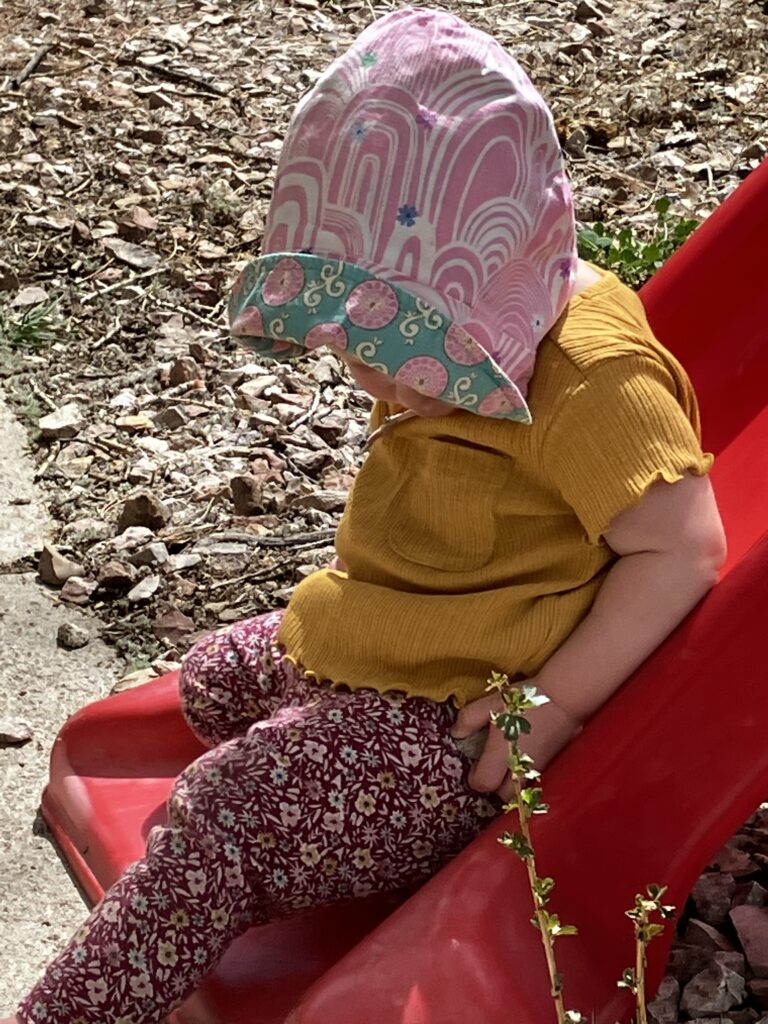
Whether you have a standard backyard, 40 acres, a patio, a balcony, a front yard, a side yard, or a rooftop terrace, if it is at least 4 by 6 feet, you can your backyard better for preschoolers. Outdoor spaces for young children to play give them, and you, a break from being inside all day and is vital for health and development. In Scandinavian countries, it is typical for young children and infants to nap outside in strollers, even in very cold temperatures. It gives children a respite from the germs, air pollution, and noises of indoor life.
Fresh air and sunshine are healthy for our bodies and important for our immune systems to function properly. Playing outside allows children time to decompress and move their bodies. The feel of wind and sunshine on their skin, the smell of grass and trees, and the sound of leaves and lawn mowers engage their senses. Children can explore their outdoor environment and develop their gross motor skills through climbing and running, their fine motor skills through playing with dirt and rocks, their hand-eye coordination by throwing a ball, and their proprioceptive skills through jumping and swinging. Let’s look at what elements to have in your outdoor space to entice your children to enjoy being outside and to stimulate their minds.
Breaking down the elements for any space
Water for the win
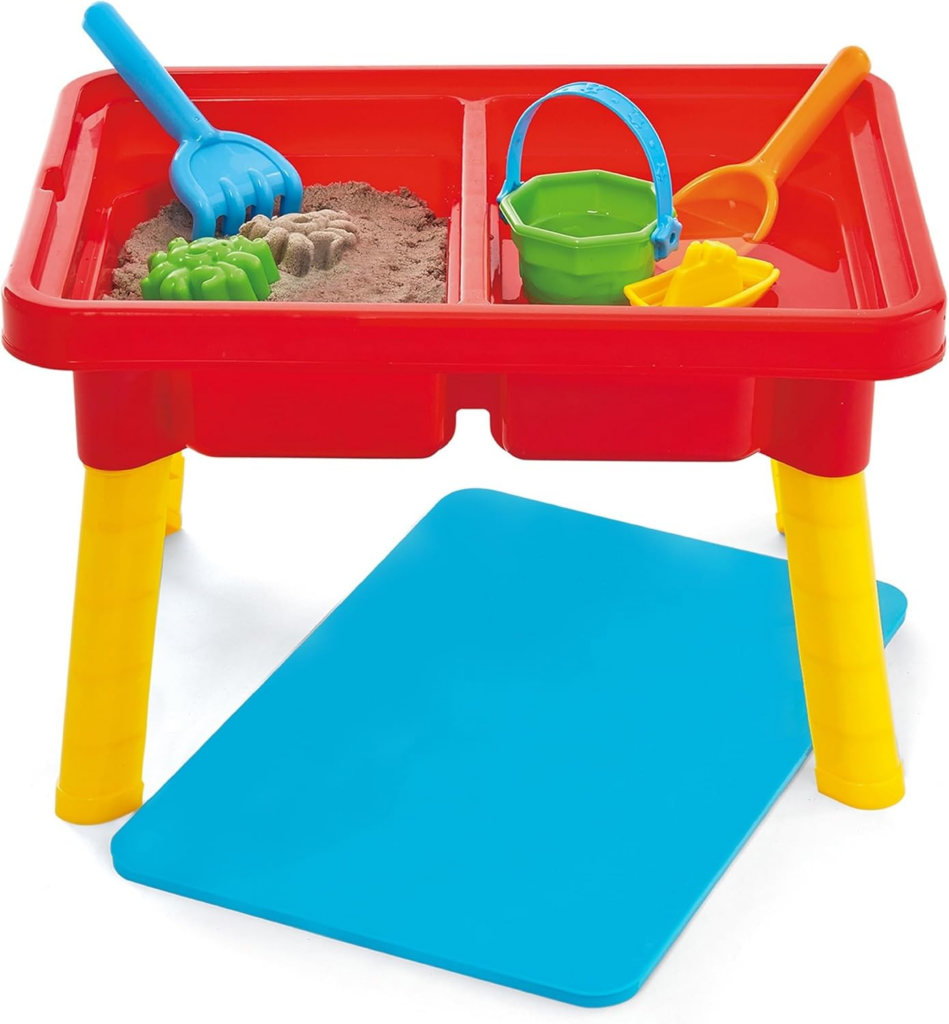
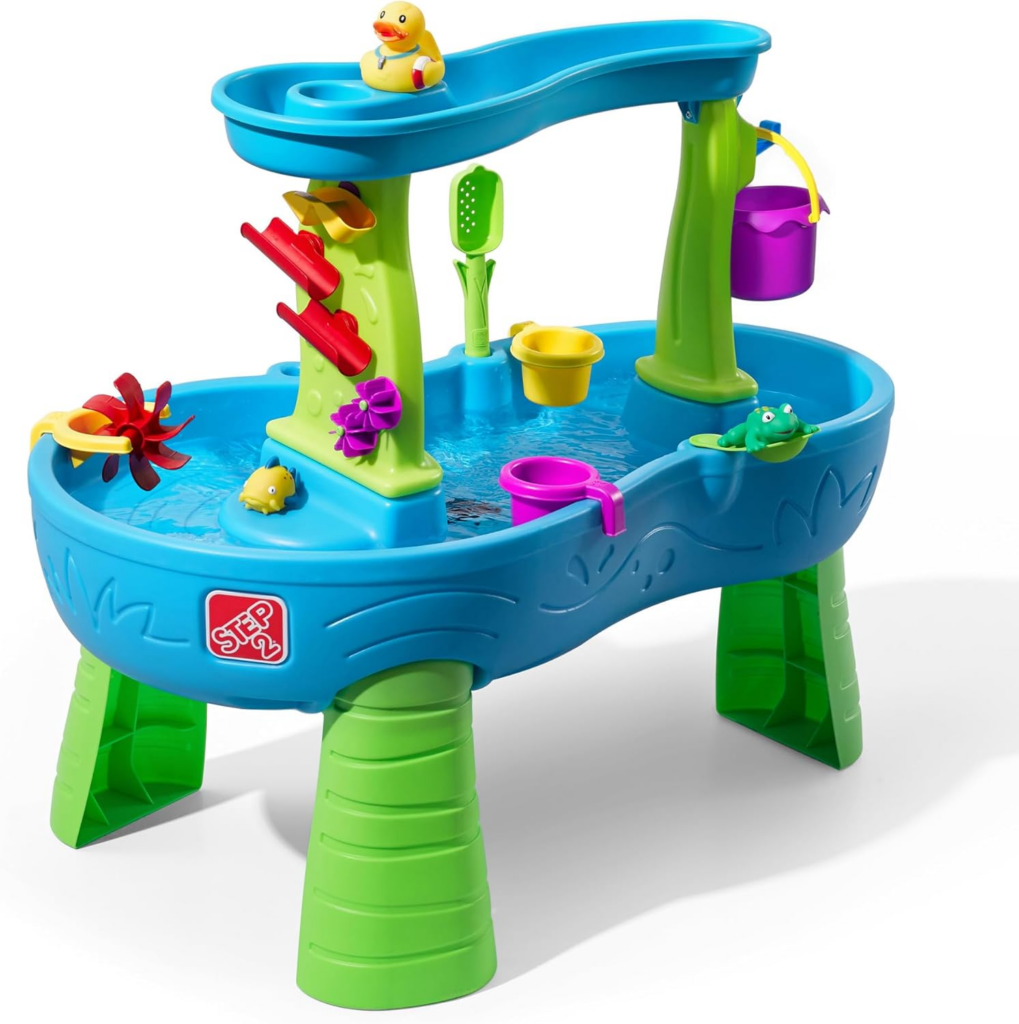
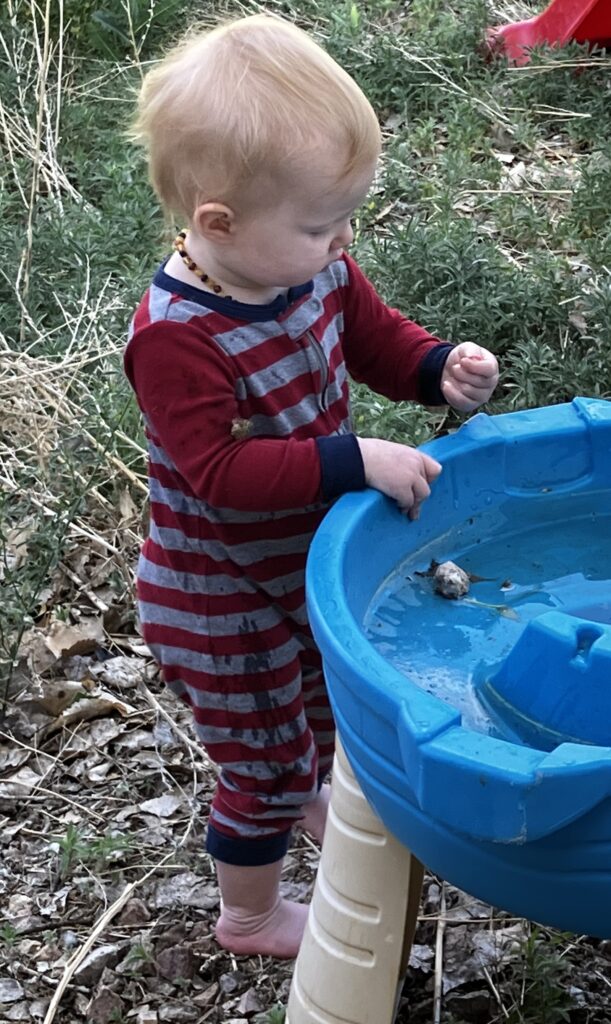
The first element to have is water. Water play outside, if it is at least 60°F, provides a lovely sensory experience for young children. Whether this is a large bowl, basin, water table, kiddy pool, a horse trough, natural pond or large pool, young children love to play with water. They love to splash in it, pour water into and out of different containers, wiggle their toes in it, create bubbles and explore the feel of water on their skin. Water is a sensory experience and is great for outdoor play. Children should have funnels, cups and sponges to use in the water to experience all of its diverse qualities. Water play teaches cause and effect, fine motor skills, and hand-eye coordination. It will make any backyard better for preschoolers.
Plants for serenity
The second element is living plants. These can be two pots with plants growing in them. This could also be a full garden, a forest behind your house, succulents if you live in the desert, or a backyard with grass. There should be dirt, rocks, leaves, something to smell, and something to touch with gentle hands. This is about creating a space to activate your child’s senses through visual green growing plants and their smells, sounds, feels and, possibly, tastes. If you do have a standard yard with grass, see if you can also have trees, bushes, or other plants growing. If you have pots, see about growing herbs that children can smell, or taste, like sage or mint. Green growing things invite young children outside and stimulate their senses in a way that concrete and rocks cannot.
Sand to get messy with
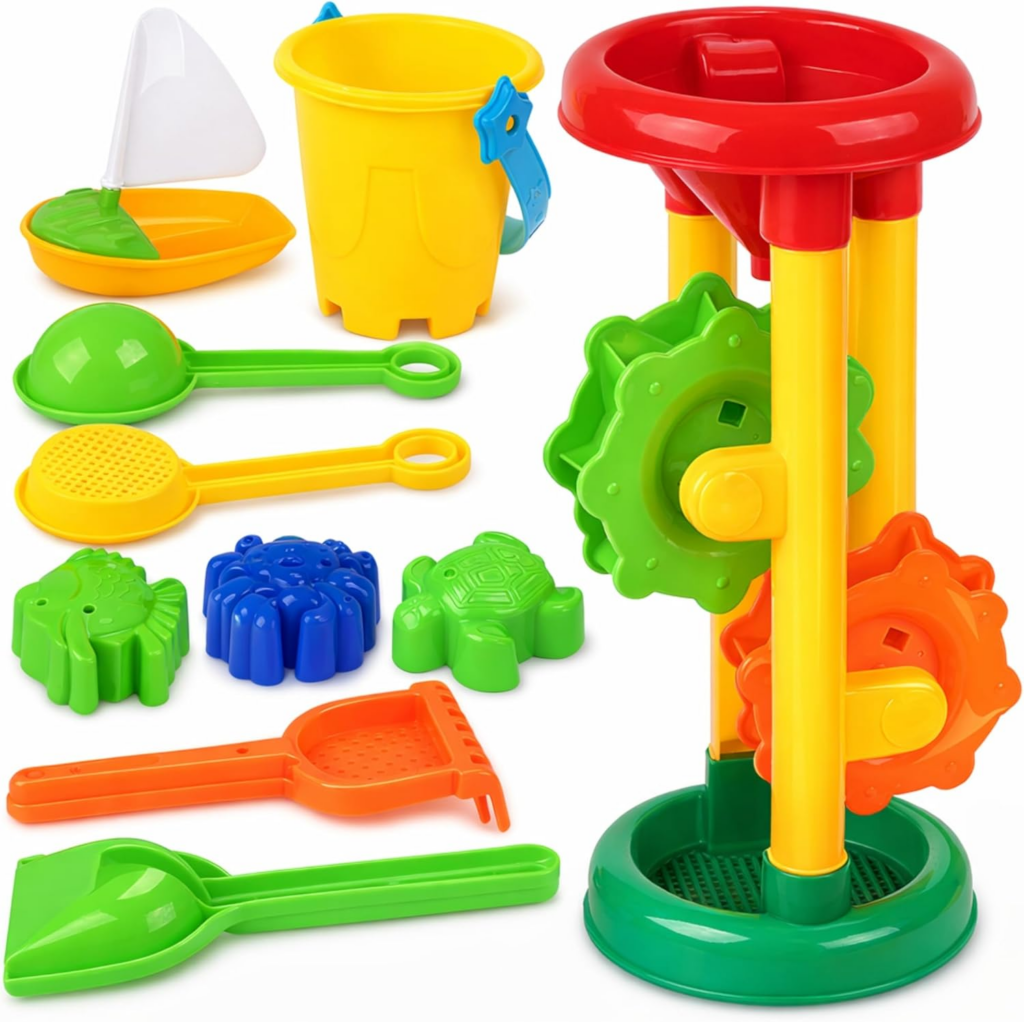
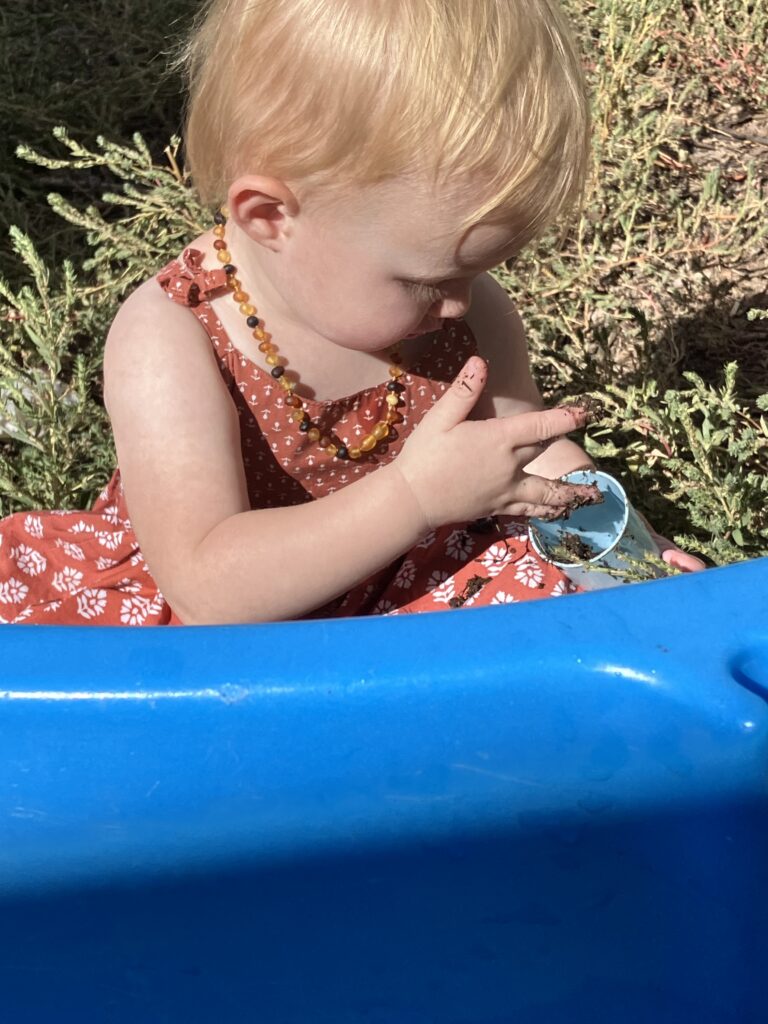
The third element to have is sand, dirt, and/or pebbles that your child can scoop, pour, build with, get dirty with and manipulate with their hands. They should be able to mix this element with their water to create new sensations and learn about mud, wet sand, or how water flows over rocks. You can use anything from a plastic bin to a huge sand box, or maybe your backyard is the beach. Children should be encouraged and allowed to make mud pies and castles. They should have shovels, buckets and molds for filling and creating. This teaches them cause and effect, hand-eye coordination, fine motor skills, visual-spatial skills and even emotional skills as they navigate their creations falling down or not turning out how they had planned.
If you have a very small outdoor space, this is all you need to make your backyard better for preschoolers. Maybe add a small chair and table for you to complete the space. Your child can still spend 45-60 minutes outside every day in this space. They can help you water the plants, you can eat snack outside, and they can play. You can find parks near you, or other outdoor spaces, to develop gross motor skills because here is where I move into discussing outdoor play equipment for bigger outdoor spaces.
Medium Sized Backyards for Preschoolers
Swings to contemplate life
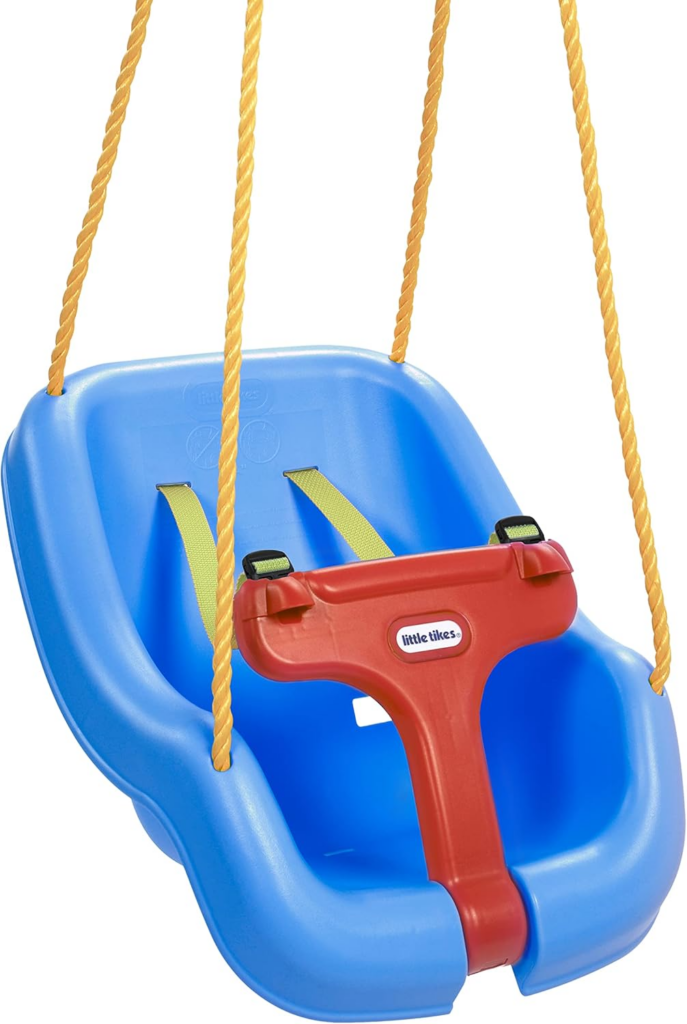
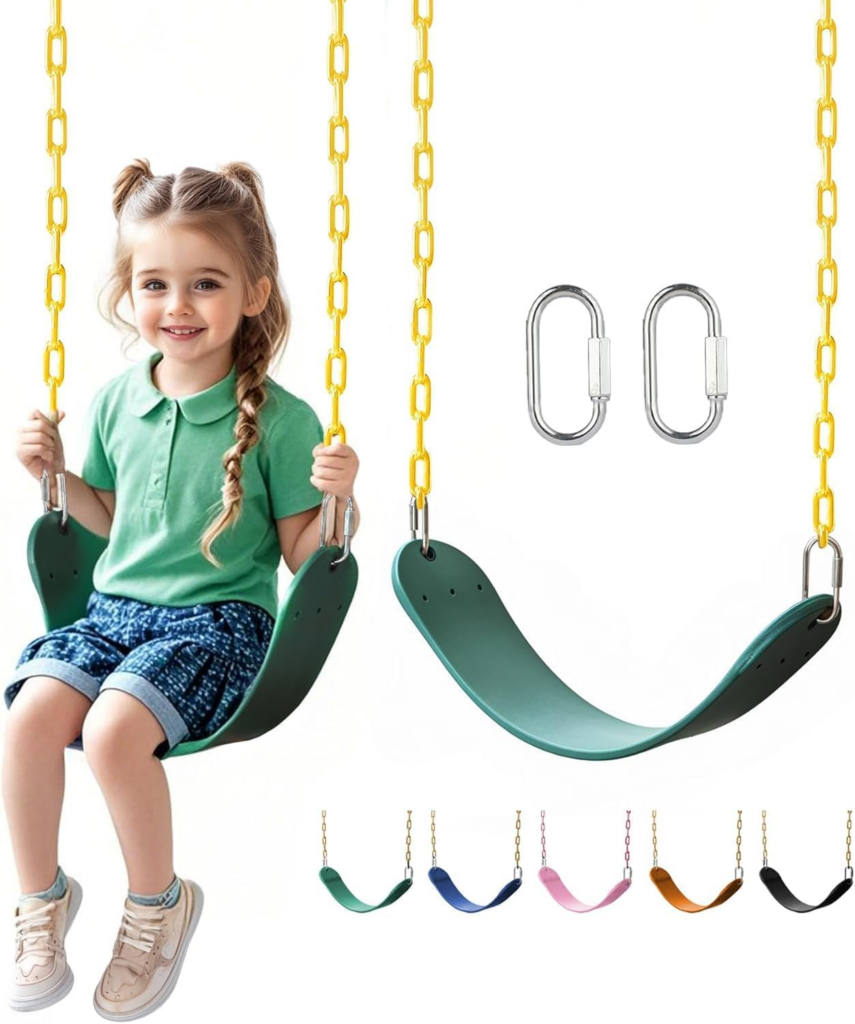
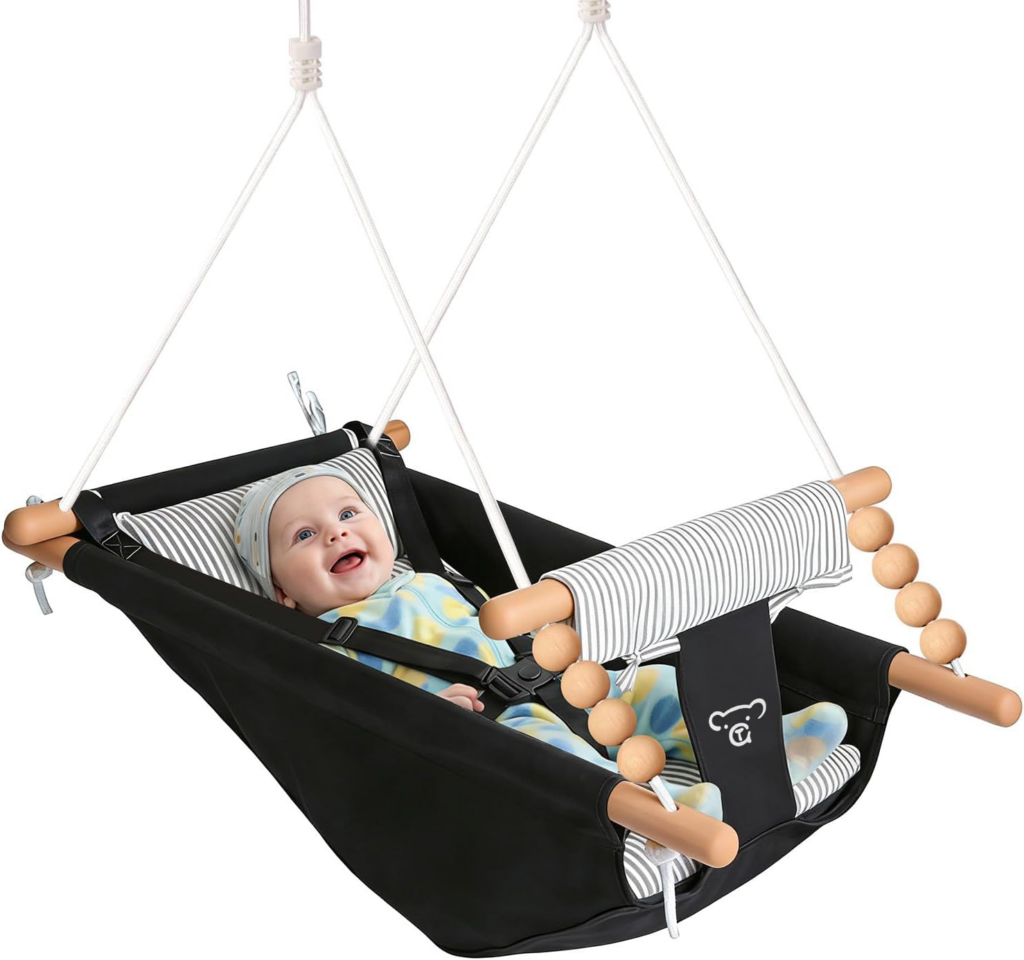
The first gross motor tool for your outdoor space would be a swing. This can be a single swing, or a full swing set. Hammocks, infant swings, or regular swings all work. Swings develop children’s proprioceptive perception through the wind against their bodies and the sensation of repetitively going back and forth. As children grow, you can change out an infant swing for a more traditional swing and your child can learn to propel themselves on their stomachs on the swing, or sit sideways and pretend they are on a horse until they are ready to learn how to pump their legs.
Children can climb all over a swing, hang from it, or create a tent by placing a towel over it. Children can push their dolls, stuffed animals or dinosaurs on the swing, and learn about not getting hit by the returning swing. Swings are great for peek-a-boo, tickling toes, singing songs, and being silly with infants. They are great for toddlers to learn about climbing into, asking for pushes or swinging on their stomachs. Swings can help make any space a better backyard for preschoolers.
Slides to go fast
The second most important play equipment is a slide. A plastic toddler slide works great, but larger slides attached to swing sets or tree houses are even better. A slide placed on a hill and properly secured can also be great fun. Slides are all about cause and effect. Children can put balls, dolls, cars and other toys down the slide as well to see how fast they move and how far they travel once off the slide. Slides act as an early science experiment teaching the laws of motion for young children. Slides develop gross motor skills, but also executive functioning skills, as children learn about height and fear, being in control or out of control, and managing the speed they feel comfortable with.
Maximizing your backyard space for preschoolers
Something to climb
The third category which I would encourage for outdoor spaces is something to climb. This could be a climbing tree, a sturdy log construction, a climbing dome, or a swing set with a climbing wall. Climbing is all about risk assessment for children. With each step up or handhold, a child assesses if they are steady or about to fall. Children learn balance, hand-eye coordination, gross motor skills and fine motor skills through climbing.
Preschoolers also work on their emotional development as they deal with falls, bonks, and disappointments. Grass, sand, or mats made for impact will provide a relatively safe landing area under the climbing equipment. Hard compacted dirt is very unforgiving, as are rocks. There should be risk with climbing, but minimal chance of serious injury. Risky play builds children’s confidence in their abilities and teaches them to manage fears. By taking risks, they are setting patterns for trying new skills, even when difficult.
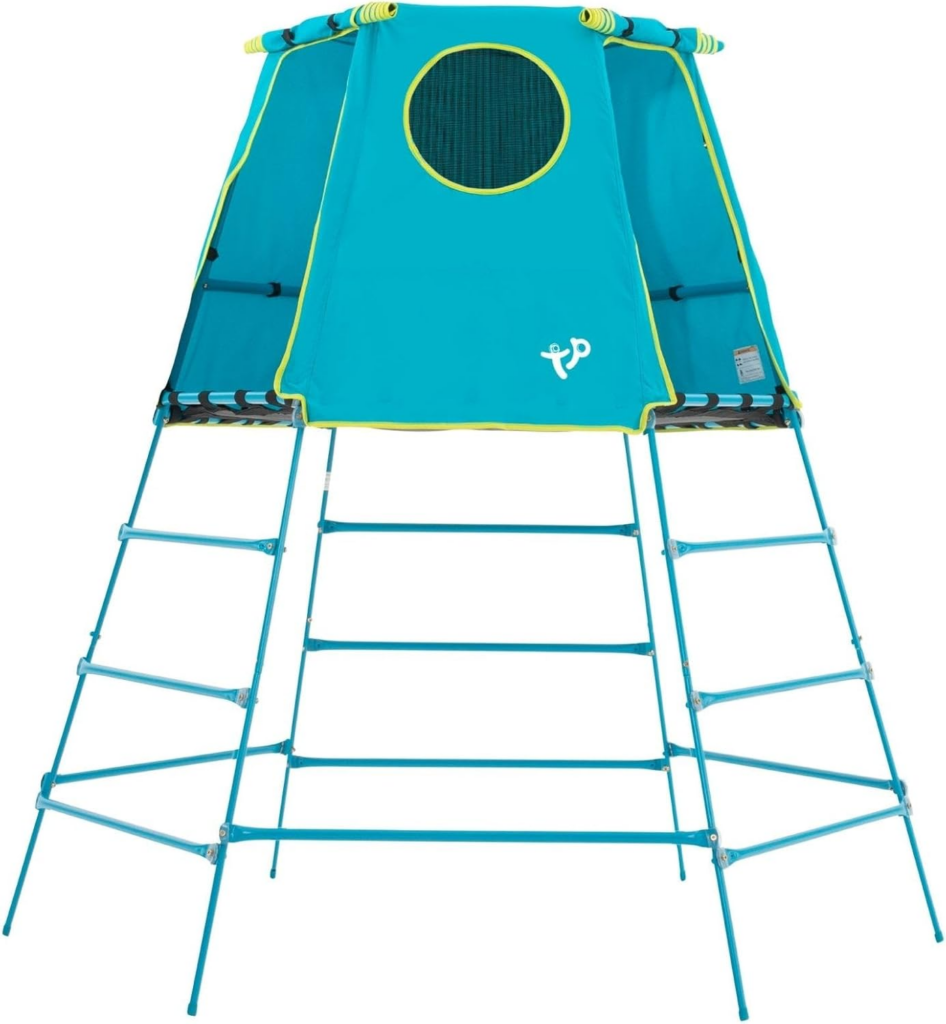
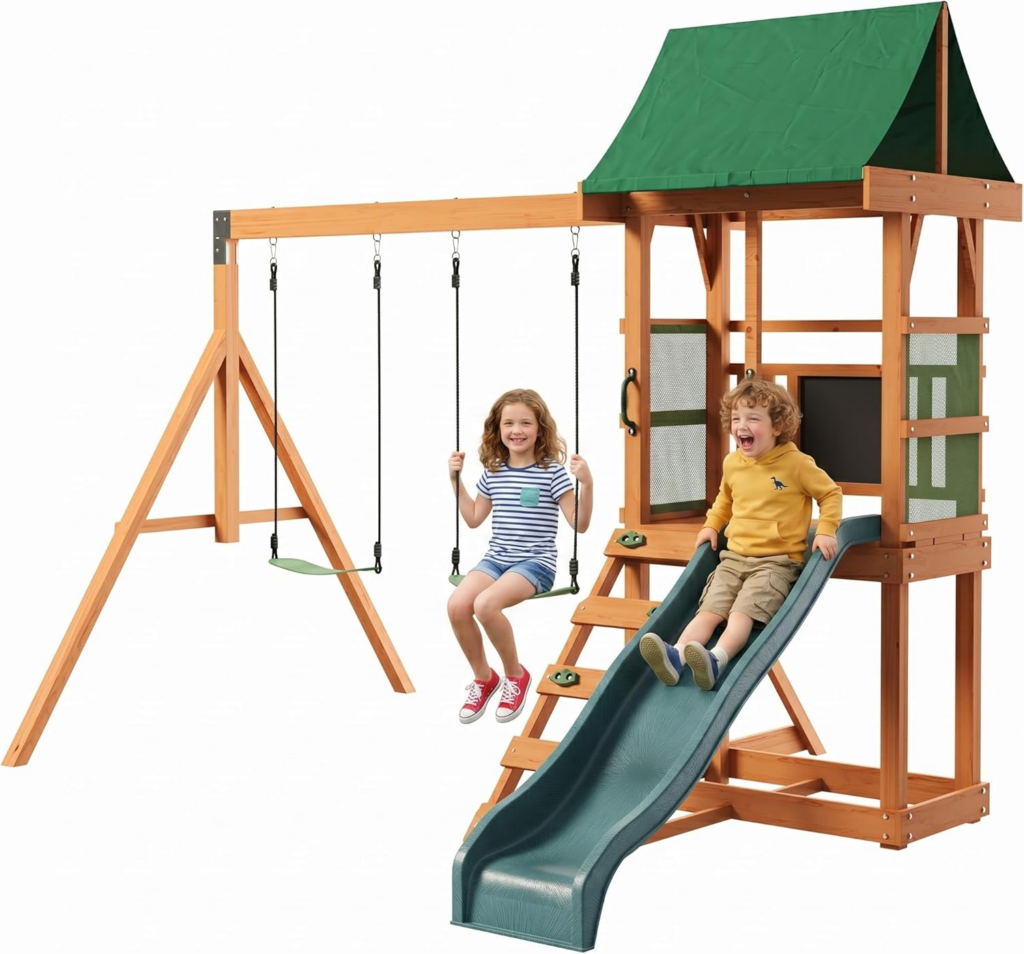
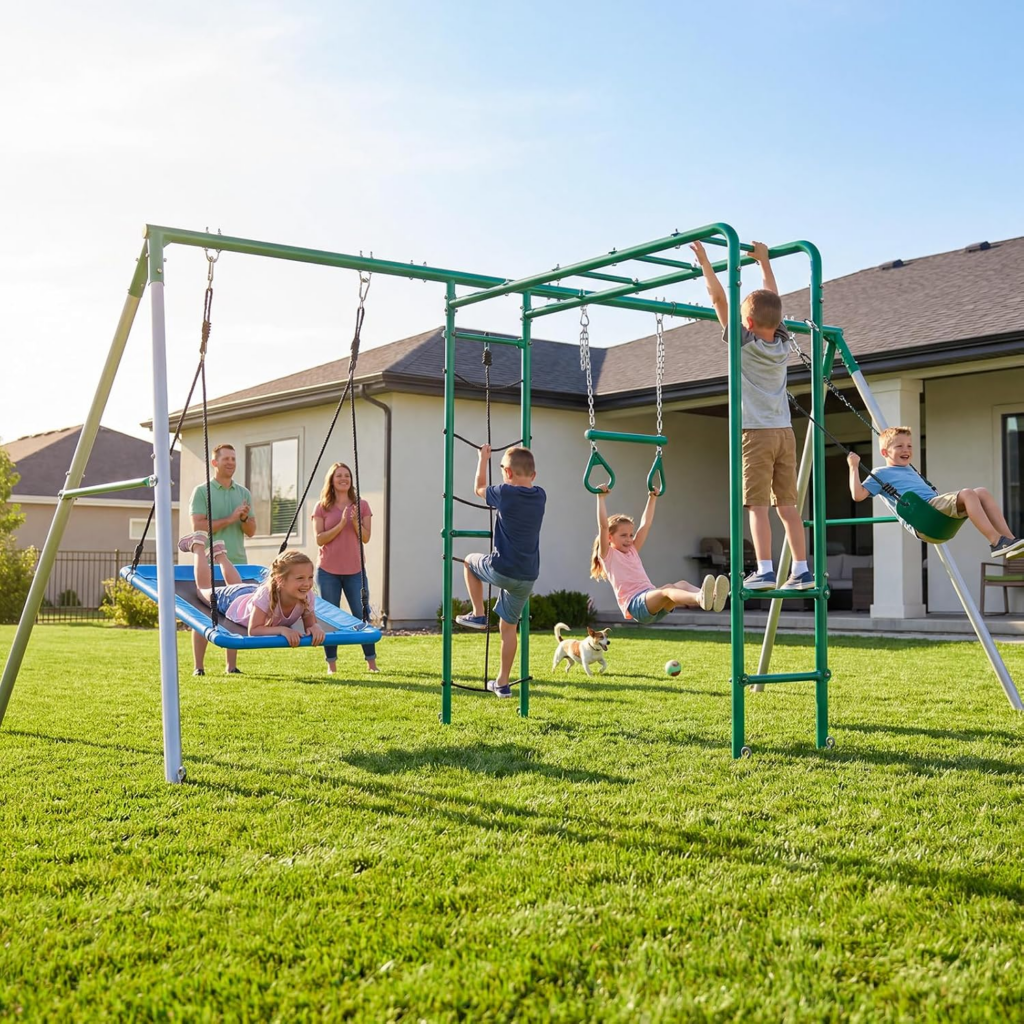
Outdoor spaces don’t have to be large, and they don’t need all of these elements immediately. Starting one step at a time, or one purchase at a time, works great. An infant is not ready for a slide or something to climb, but even newborns can enjoy water play in their warm bath. Most of all, outdoor spaces should be fun and relaxing for everyone, so include your comfort in your outdoor planning.
How to Encourage Inside Movement with Preschoolers – hummingbirdhomelife.com
Happy playing!
Leave a Reply